
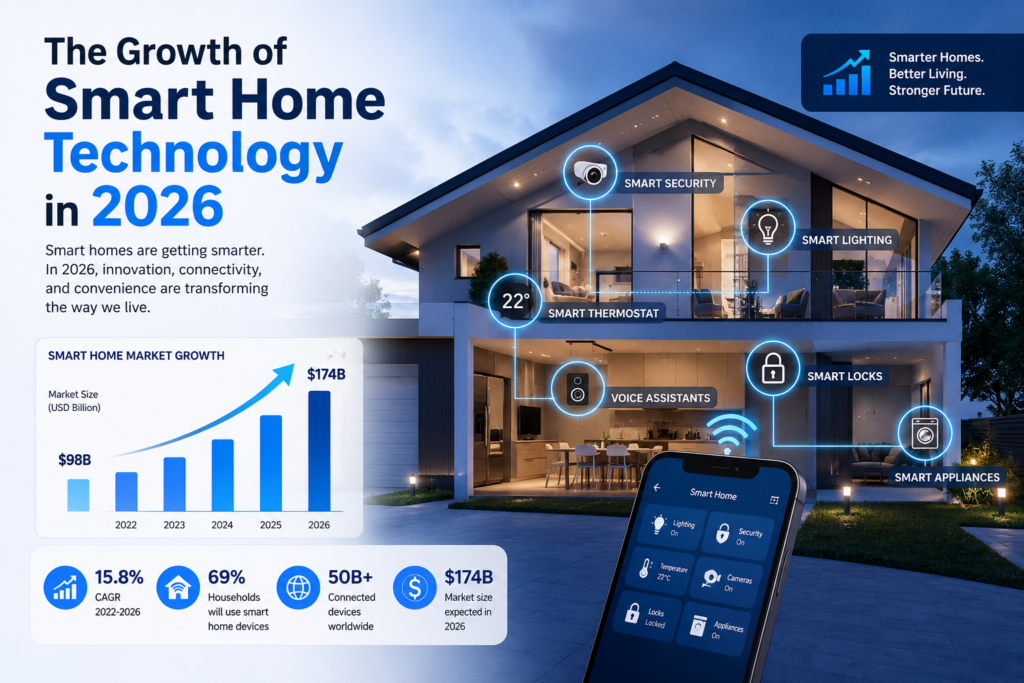
The development of smart home devices is no longer in the future. Now, in 2026, they have become a normal addition to every home. Smart home devices have turned into tools that alter the way people live, work, and manage their personal spaces. The devices that help manage the family schedule, control the lights, cook dinner, and protect the family are easily becoming the most coveted and accessible items.
If you have been able to watch technology improve, you have seen how quickly the draw of convenience has been able to help items once only possible in sci-fi movies, appear in every home. Automation, control, safety, and organization the latest smart technology delivers, has helped make the once impossible incredible technology commonplace.
The accessibility and abundance of automation technology means that the surrounding environment is a tool that knows and meets your preferences. Each smart device contributes to the main purpose of this technology: to make your life easy.
What Are Smart Home Devices?
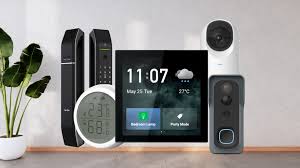
Smart home devices are connected to the Internet and able to be controlled via remote access. Communication devices, phones, tablets, and automation systems can be used to access these technologies. The devices perform their functions by collecting information, responding to commands, and learning behaviors in order to anticipate what the user wants.
The purpose of smart home innovation is to simplify daily routines and optimize activities. For example, rather than turning lights and thermostats off and checking security cameras in person, users can do all of that and more from an app or from their voice.
This level of convenience has completely altered the day-to-day operations of a household. Home automation has become personalized.
Voice-Controlled Smart Assistants
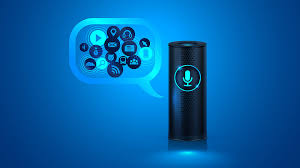
Voice technology has cemented its place in smart technology. Voice technology helps users of the devices control a multitude of systems from anywhere, and without touching a single button.
People now use voice commands to:
- Turn lights on and off.
- Control music.
- Lock doors.
- Use home appliances.
- Check the weather.
- Control timing.
- Set reminders.
- Control the security of a system.
Voice technology has made great strides in accuracy, and is faster and more reliable. Users are able to communicate via voice in a more natural/uniform way because of improvements in natural language understanding.
Inheritance of convenience as a signal of voice technology has become the central hub of smart home technology.
Smart Lighting: More Intelligent Technology
Light technology has advanced and improved enormously in the last few years. Smart lighting technology moves beyond simple remotes.
New bulbs can automatically change level of brightness or even adjust color to preferable light in the room.
Some smart systems have the ability to change the color of light in the room. Systems have an option to control the color to matched the natural light throughout the day. This helps the use of better lighting for concentration and relaxation.
Motion-sensitive lights have gained popularity in recent years. Convenient and secure auto-on hallway and outdoor lights have driven their popularity.
Additionally, these smart lights can save energy. They turn on only when needed, optimizing electricity usage.
The Future of Home Security is Here
Smart home technology prioritizes security, and the future looks promising. Home security technology is more advanced, easier to use, and more affordable than ever in 2026.
Smart home security technology includes surveillance cameras, motion sensors, smart doorbells, and smart alarm systems; all of which allow for remote monitoring of home security. Live surveillance streams are accessible via smart devices.
Common features of advanced security technology include AI, differentiated object detection, and facial recognition. Unlike earlier alarm systems, modern smart security alarms can distinguish between a human, a pet, a car, and suspicious activity, and send alerts accordingly.
Smart locks allow for remote door control and access code generation, as well as access history.
The convenience of smart security features enables peace of mind.
Smart Energy Management
Smart thermostats are leading a new focus on energy efficiency in modern homes.
Recent innovations in thermostats allow for smart learning of household routines. Traditional thermostats depended on manual adjustments, but smart heating systems can operate with lower energy consumption during the unoccupied hours of a home and increase comfort for residents during occupied hours.
Some systems offer sophisticated energy reports. These reports help homeowners comprehend their usage and discover ways to spend less on their electricity.
Smart climate control technology helps you save on energy costs and enhances comfort as energy prices continue to rise.
Connected Kitchen Appliances Have Revolutionized Cooking
Connected appliances help prepare meals and manage the home.
Smart fridges even offer recipes based on what groceries you have, along with tracking groceries and expiration dates. Not only can you remotely control the settings on your oven, you can also brew your coffee on a schedule with a smart coffee maker.
While all these appliances help individually, the overall result is a unified kitchen system.
An automated kitchen also helps households simplify meal making, save time, and be less wasteful.
Artificial Intelligence and the Smart Home
AI is what helps your smart home manage itself by recognizing habits and automating preference.
As time goes on, systems only become more sophisticated and tailored to your needs.
AI also enhances security, voice recognition, energy control, and coordination between your devices.
What previously separated smart homes from the rest of the gadgets was the sophistication of the automation.
Smart Entertainment Systems Enhance Home Experiences
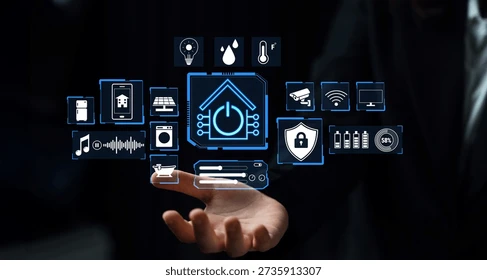
With every passing day, the convergence of entertainment technology and smart appliances takes another step forward.
Smart TVs connect wirelessly with smart audio systems and streaming services and transmit commands from virtual assistants and smartphones. Entire entertainment systems can be controlled by voice commands or automated tasks.
More advanced and more convenient entertainment systems have greatly enhanced the home entertainment experience.
With the goal of minimizing the setup and the control effort required to access entertainment, they have made home entertainment systems more social and connected.
Smart Home Devices Integration Standards
With more smart devices than there are consumers, the market has shifted and the importance of compatibility has trumped any other feature.
Previously, consumers had to deal with devices from different brands that often had deficient integration. Improved connectivity standards have enhanced smart devices integration to the point where systems a consumer has can be easily integrated and unified.
Smart homes systems can be implemented without the consumers having to be concerned with systems from different brands.
Privacy and Data Security with smart home devices
Compared to the convenience of smart devices, the integration of devices from different brands has enhanced data security and user privacy.
Users are learning how to better protect their home network from outside attacks and how to patch their devices to remove any software vulnerabilities.
As the Internet of Things continues its inexorable growth, cybersecurity will be an increasingly prevalent topic.
Why Smart Home Device Technology is Continually Advancing
Rapid advancements with smart home technology are made possible through:
- Ubiquitous access to the Internet
- Increased demand for convenience
- Improved AI
- Increased energy efficiency
- Enhanced home security
- Rising use of smartphones
- Improved device standardization
Users can start with only one or a few devices and add on over time, making smart technology more feasible and appealing to the entire population.
The Coming Smart Home devices Revolution
We can expect smart homes to be user and context aware, with predictive and advanced AI that will minimize the need for user initiated actions to interact with devices within the home.
Automation of personal health to Energy AI balance will transform the living environment.
Connected and smart homes should not only be a self fulfillment luxury, but enhance the quality of life of all.
Smart Home Devices: Treasures or Trash?
Modern smart devices are no longer a self-fulfilling luxury or a treasure. They have become commonplace and have transformed the home with improved quality.
With advancing technology, intelligent homes and their devices that provide greater interconnection and ease will become synonymous with an enhanced living experience. Current devices are merely an introduction to an eventual proficiency in intelligent living.
By 2026, the use of smart home technology will transcend the novelty of displaying advanced devices. It will be focused on constructing buildings that provide a greater level of adaptability and ease throughout the work of daily living.